The claim that Africans are lazy is too shallow to explain the reality around us. Across the continent, people work long hours, carry heavy responsibilities, adapt under pressure and create possibilities with limited resources. The better question is not whether people work hard. The better question is what happens to all that effort.
Hard work alone does not automatically become innovation. Talent alone does not become a product. Ambition alone does not become a company, a device, a policy, a scientific breakthrough or a community solution. For that conversion to happen, effort needs systems.
Those systems include schools that reward experimentation, mentors who guide young builders, funding that can tolerate early failure, laboratories and tools, supportive policies, market access, patient institutions and communities that respect practical problem solving.
The Lazy Story Is Too Small
When people say Africans are lazy, they often ignore the structure around the person. A young learner may be bright but have no access to practical STEM equipment. A graduate may have ideas but no mentorship or startup support. A teacher may want to run hands-on lessons but lack materials. A founder may build a useful product but struggle to reach customers, finance or regulatory guidance.
In each case, the problem is not simply attitude. The problem is the absence of a reliable pathway that turns effort into outcomes.
Where Effort Leaks Away
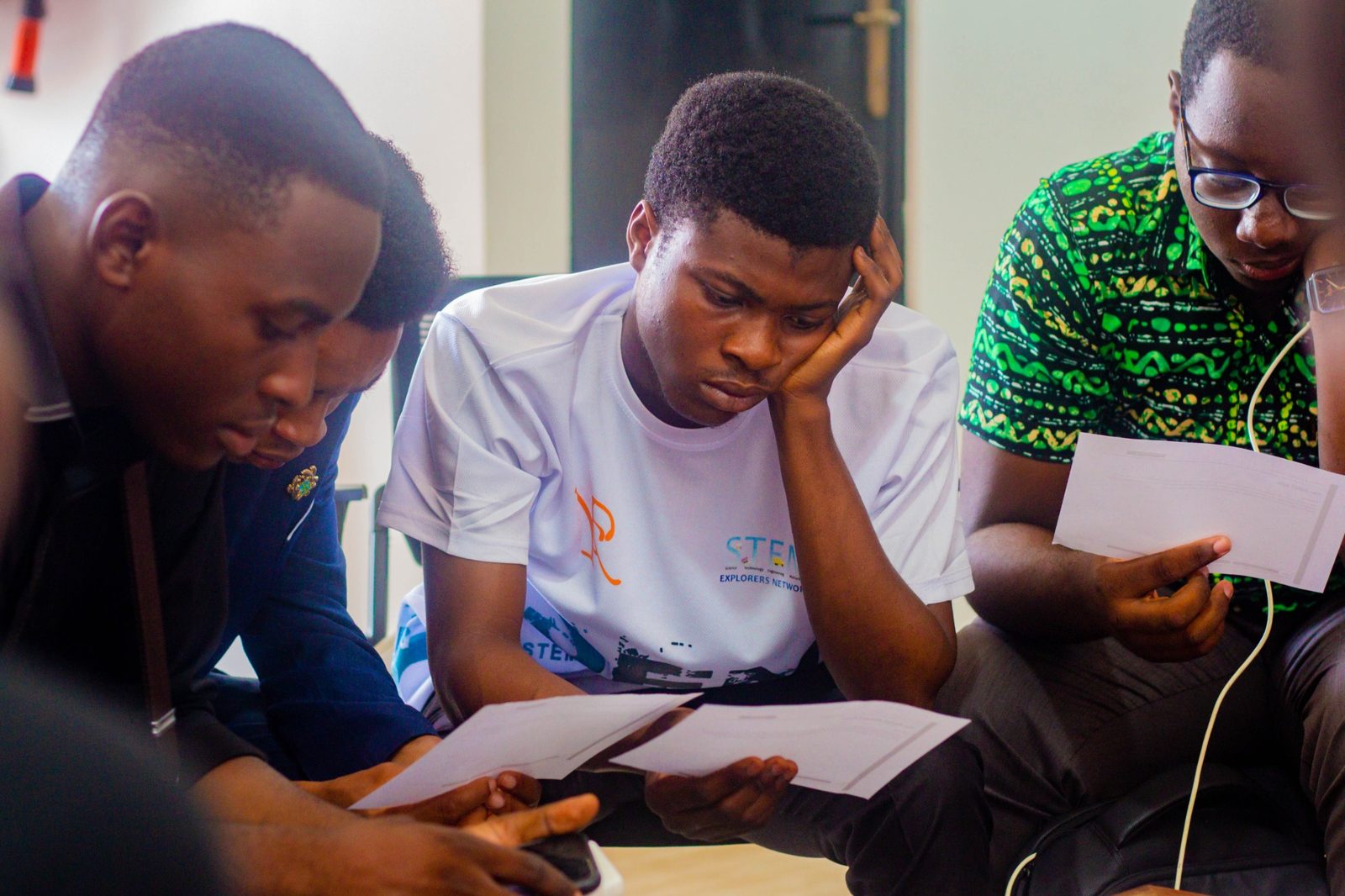
Every society has talented young people. The difference is what happens after talent appears. In strong innovation ecosystems, a curious student can find clubs, labs, mentors, competitions, internships, funding, peer communities and public recognition. Each layer catches the learner and moves them forward.
Where those layers are weak, effort leaks away. Students may work hard for exams but never learn how to build. Young people may identify problems but never meet people with complementary skills. Communities may celebrate foreign solutions while local ideas struggle for attention. Over time, people begin to believe the issue is laziness when it is often a systems failure.
Innovation systems make effort visible through:
- Practical learning spaces where students can build and test.
- Mentors who help young people sharpen ideas and avoid common mistakes.
- Funding and partnerships that give early ideas room to mature.
- Schools and programs that reward curiosity, not only memorization.
- Showcase platforms where local solutions can be seen and supported.
What SEN Is Building
SEN's work sits inside this systems gap. Robotics Bootcamps help younger learners experience technology as builders. Little Innovators Workshop helps children dismantle, rebuild and reimagine. The LDTP Mini Accelerator gives young people a structured pathway from idea to prototype. The SEN Innovation Challenge helps tertiary teams move through bootcamps, mentorship and practical solution development.
None of these programs claim to solve Africa's innovation challenge alone. But each one builds a small piece of the culture we need: a culture where young people are expected to create, test, repair, question and present.
Africa does not lack intelligence. It needs stronger systems that help intelligence become products, services and public value.
From Blame to Building
Blame is easy. Building is harder. It is easier to accuse a generation of laziness than to create the schools, labs, funds, mentorship networks and markets that help that generation produce. But if we want different outcomes, we need to choose the harder work.
The future will not be changed by slogans alone. It will be changed by practical systems that give young Africans repeated chances to learn, build, fail safely, improve and scale. That is the conversation SEN wants to keep pushing.