The SEN Day Out at Kwabenya Senior High School carried a simple but powerful message: STEM is not reserved for one group of students. It is already inside the way we farm, dress, heal, design, move, trade, communicate and solve everyday problems.
For many young people, STEM can feel like a distant word. It can sound like something that belongs only to the best science students, the people who already know how to code, or the few learners who have access to laboratories and robotics kits. SEN uses school outreach to challenge that idea early. The goal is not to make every student choose the same career; the goal is to help every student see that curiosity, evidence, creativity and problem solving can belong to their future.
The session opened with honest questions. What do students think STEM is? Where do they already see science or technology in their daily lives? Which careers feel possible, and which ones feel too far away? Those questions created space for students to speak before the facilitators taught.
Making STEM Feel Close
Through interactive talks, videos and practical examples, students saw how science, technology, engineering and mathematics show up in familiar places. Fashion uses measurement, materials, digital design and production systems. Sports uses data, nutrition, body mechanics and performance tracking. Agriculture uses soil science, weather information, irrigation systems, drones and post-harvest technology. Health uses biology, diagnostics, devices and patient data. Even media and business depend on digital tools, analytics and design thinking.
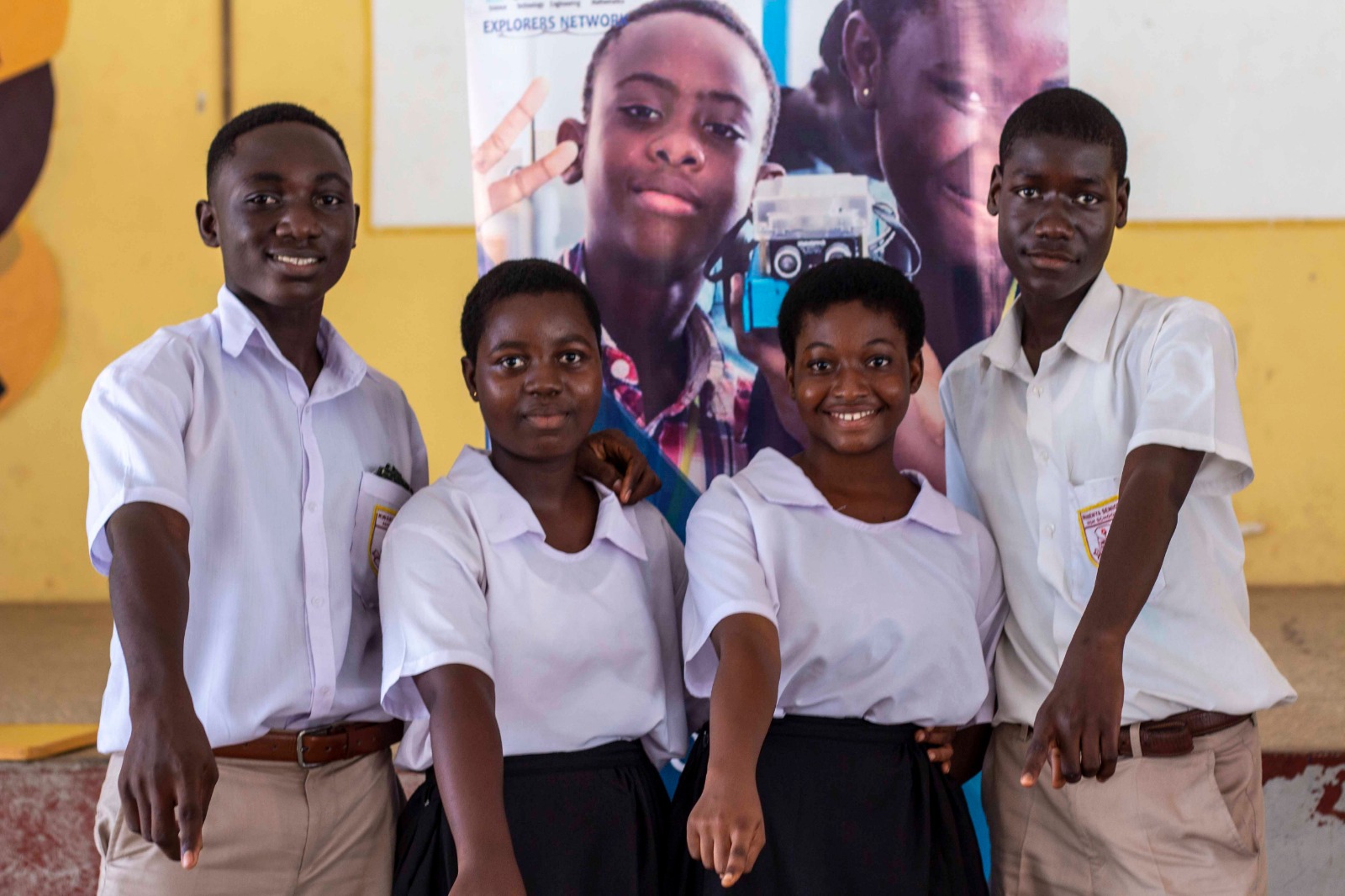
That shift matters. When students hear STEM explained only through difficult formulas, some quietly decide it is not for them. When they see STEM connected to fashion, medicine, farming, sports, design, business and community life, they begin to recognize entry points. A student who loves drawing can become curious about product design. A student who loves football can become curious about performance science. A student who cares about people can begin to imagine biomedical science, public health, nursing technology or assistive devices.
What Students Took Away
The most important outcome was confidence. Students were not only listening; they were rethinking what their own interests could become. Some asked about careers. Some wanted to know which subjects mattered. Others began connecting their current courses to practical futures they had not considered before.
"Today's event encouraged me to pursue biomedical science. It proved that my course is not difficult, and I can achieve anything."
That kind of reflection is the reason SEN keeps returning to schools. A single outreach does not solve every barrier, but it can interrupt doubt. It can give a student permission to try. It can help them ask a better question about themselves: not "am I a STEM person?" but "what problem do I care enough to understand and solve?"
Why SEN Day Out Matters
- It helps students see STEM beyond textbook definitions.
- It connects career pathways to real interests and community needs.
- It gives schools a practical way to start wider STEM conversations.
- It builds confidence before students rule themselves out of STEM opportunities.
Access Is More Than Equipment
STEM access is often discussed in terms of labs, devices and internet connectivity. Those things are important, but access also has an emotional and cultural side. A student needs to believe that they are allowed to ask questions. They need to see people who look like them solving problems. They need adults who can translate big ideas into language that feels reachable.
SEN Day Out is built around that kind of access. It creates a bridge between inspiration and practical action. Students leave with broader language, stronger motivation and a clearer sense that their classroom learning can connect to real-world work.
What Comes Next
For SEN, outreach is not a one-off performance. It sits inside a wider pathway of programs that include Robotics Bootcamp, Little Innovators Workshop, the SEN LDTP Mini Accelerator and the SEN Innovation Challenge. Each program serves a different age group and learning stage, but the mission is consistent: ignite curiosity, empower learners and help young people move from passive consumption to confident creation.
Kwabenya SHS reminded us that students are often closer to STEM than they think. Sometimes they only need someone to help them name the connection.